

Blog & News
The Ultimate Guide to Sustainable Cosmetic Packaging for US Beauty Brands
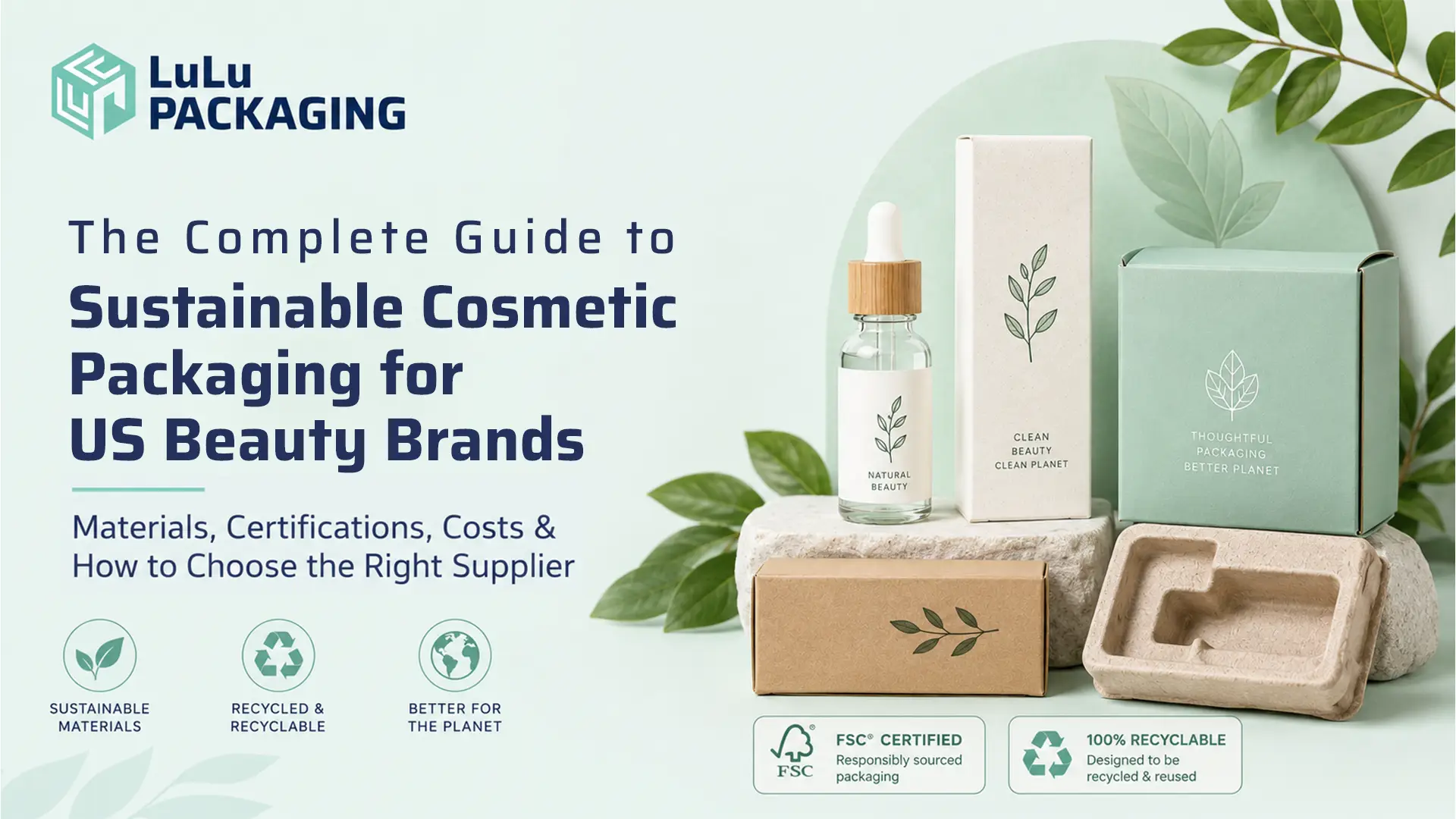
Let me tell you something we hear almost every week.
A beauty brand founder calls us, excited about their new skincare line, confident in the formula, and ready to launch. Then we get to packaging. And somewhere between "I want it to look premium" and "my customers care about sustainability," the conversation stalls.
They've done the research. They know they want eco-friendly cosmetic packaging. But they've found a dozen different materials, half a dozen certifications, and zero clarity on what any of it actually means for their specific product.
That's exactly why we wrote this guide.
We supply custom sustainable packaging to beauty brands across the United States. We've worked with indie founders launching their first 500 units and procurement teams managing SKUs in the thousands. And the questions tend to be the same, no matter the size of the brand.
What materials actually hold up? What does sustainable really mean? How much is this going to cost? And how do I find a supplier I can actually trust?
We're going to answer all of it. No jargon. No greenwashing. Just practical guidance from people who do this every day.
Why Sustainable Packaging Has Become a Business Decision, Not Just an Ethical One
Five years ago, eco-friendly packaging was a differentiator. A nice-to-have. Something the premium brands did.
That's no longer true.
The cosmetic industry produces close to 120 billion units of packaging every year. Most of it ends up in a landfill. Consumers are paying attention. And they're making purchasing decisions based on it. Research now shows that more than 65% of beauty buyers actively look for brands using sustainable packaging. A significant portion are willing to pay more for it.
But this isn't just about consumer preference. The regulatory landscape is shifting too.
States like California are enforcing Extended Producer Responsibility Laws that require packaging to meet recyclability thresholds. Federal guidelines around circular economy principles are tightening. If your packaging doesn't meet tomorrow's standards, you're not just losing eco-conscious customers. You're facing compliance risk.
And then there's the brand story angle.
Your packaging is the first physical thing a customer touches. It arrives before the product does, in the case of e-commerce. It sits on a shelf and communicates your values before anyone reads the label. In 2025, that first impression includes sustainability, because over three-quarters of beauty shoppers now say ingredient and material transparency matters to them.
The beauty brands that are winning right now aren't treating sustainable packaging as a cost. They're treating it as a message.
How to Evaluate Sustainable Cosmetic Packaging Materials
This is where most guides lose people. They list ten materials, use a lot of acronyms, and leave you more confused than when you started.
We're going to do it differently. Here's what we actually see beauty brands choosing, and what we tell them when they ask.
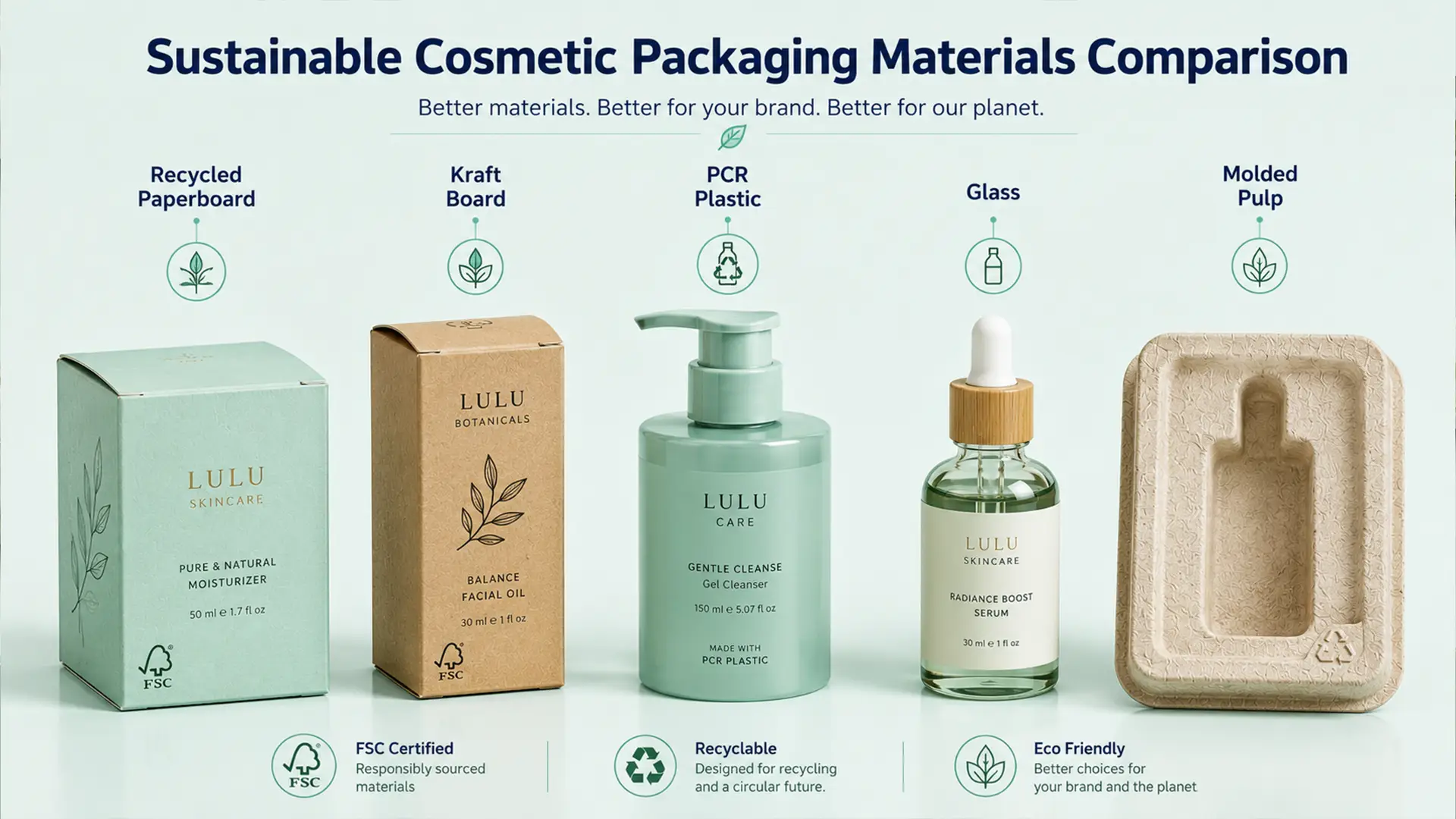
Recycled Paperboard and Kraft Board
This is our most-requested material for a reason.
Recycled paperboard is used for outer boxes, folding cartons, product sleeves, gift sets, hang tags, and inserts. It's made from post-consumer or post-industrial fiber, which means the raw material isn't coming from a freshly cut tree. FSC-Certified options go a step further. They're verified as coming from responsibly managed forests.
What makes it practical: it prints beautifully. You can foil stamp it, emboss it, do a soft-touch matte laminate. You don't have to sacrifice aesthetics to go sustainable. That's the part brands often don't believe until they see a sample.
It's also one of the most cost-competitive eco options we offer. In most cases, switching from standard paperboard to recycled content won't dramatically change your unit cost, especially at volume.
Best for: Outer boxes, cartons, product sleeves, gift sets, subscription boxes
Watch out for: Make sure your printer uses water-based or soy-based inks to keep the full sustainability story intact
Post-Consumer Recycled (PCR) Plastic
PCR plastic is made from materials that have already been used: plastic bottles, food containers, and packaging, collected, processed, and turned into new packaging.
It's not perfect. It's still plastic. But for brands that aren't ready to leave plastic behind entirely, or whose formula requires a plastic container for compatibility reasons, PCR is a meaningful step forward. It requires roughly 15% less energy to produce than virgin plastic. And it keeps existing plastic out of the waste stream.
The tradeoff: PCR plastic can show some inconsistency in color and texture compared to virgin material. For a brand that needs a pristine clear bottle, that might matter. For a brand using an opaque container or a bold label, it usually doesn't.
Best for: Bottles, tubes, caps, pumps, and anything that currently uses plastic
Watch out for: Products with active ingredients (certain retinoids, vitamin C): always test compatibility first
Molded Pulp and Biodegradable Packaging
Molded pulp is having a moment. You've seen it in high-end gift boxes: the kind that cradles a perfume bottle in a shaped paper insert instead of plastic foam. It's made from recycled paper or agricultural fiber like sugarcane bagasse.
It's fully recyclable, often compostable, and it looks premium. That last part surprises people. There's something tactile and intentional about a well-made molded pulp insert that communicates quality better than plastic ever could.
We're seeing more beauty brands use it for e-commerce packaging, seasonal sets, and retail gift boxes. If you're selling anything that positions itself as luxury or clean beauty, molded pulp is worth a serious look.
Best for: Interior inserts, gift set trays, e-commerce protective packaging
Watch out for: Higher per-unit cost than plastic foam at low volumes. MOQs apply.
Glass
Glass is the material with the best sustainability story on paper. It's 100% recyclable, infinitely so, without losing quality. It doesn't leach chemicals. It communicates premium before anyone reads the label.
The challenges are real though. Glass is heavy, which affects shipping costs and carbon footprint per shipment. It's fragile, which adds complexity for e-commerce brands. And it costs more than most plastic alternatives.
For certain products like serums, face oils, fragrances, and tinctures, glass is often the right call anyway. The perceived value it adds justifies the cost, and the formula compatibility is usually better. For a $12 body wash, probably not. For a $90 vitamin C serum, almost certainly yes.
Best for: Serums, oils, fragrances, toners, luxury skincare
Watch out for: E-commerce shipping: inner packaging and protective inserts become more important
Quick Comparison
| Material | Recyclable | Biodegradable | Relative Cost | Best Application |
|---|---|---|---|---|
| Recycled Paperboard | Yes | Yes | Low–Medium | Boxes, cartons, sleeves |
| PCR Plastic | Yes | No | Medium | Bottles, tubes, caps |
| Molded Pulp | Yes | Yes | Medium | Inserts, gift trays |
| Glass | Yes | No | High | Serums, oils, fragrance bottles |
How to Tell If Packaging Is Actually Sustainable (and Not Just Marketed That Way)
This is the part nobody talks about enough.
The word "sustainable" has no legal definition in packaging. Anyone can print it on a box. That means you, as the buyer, need to know what to look for.
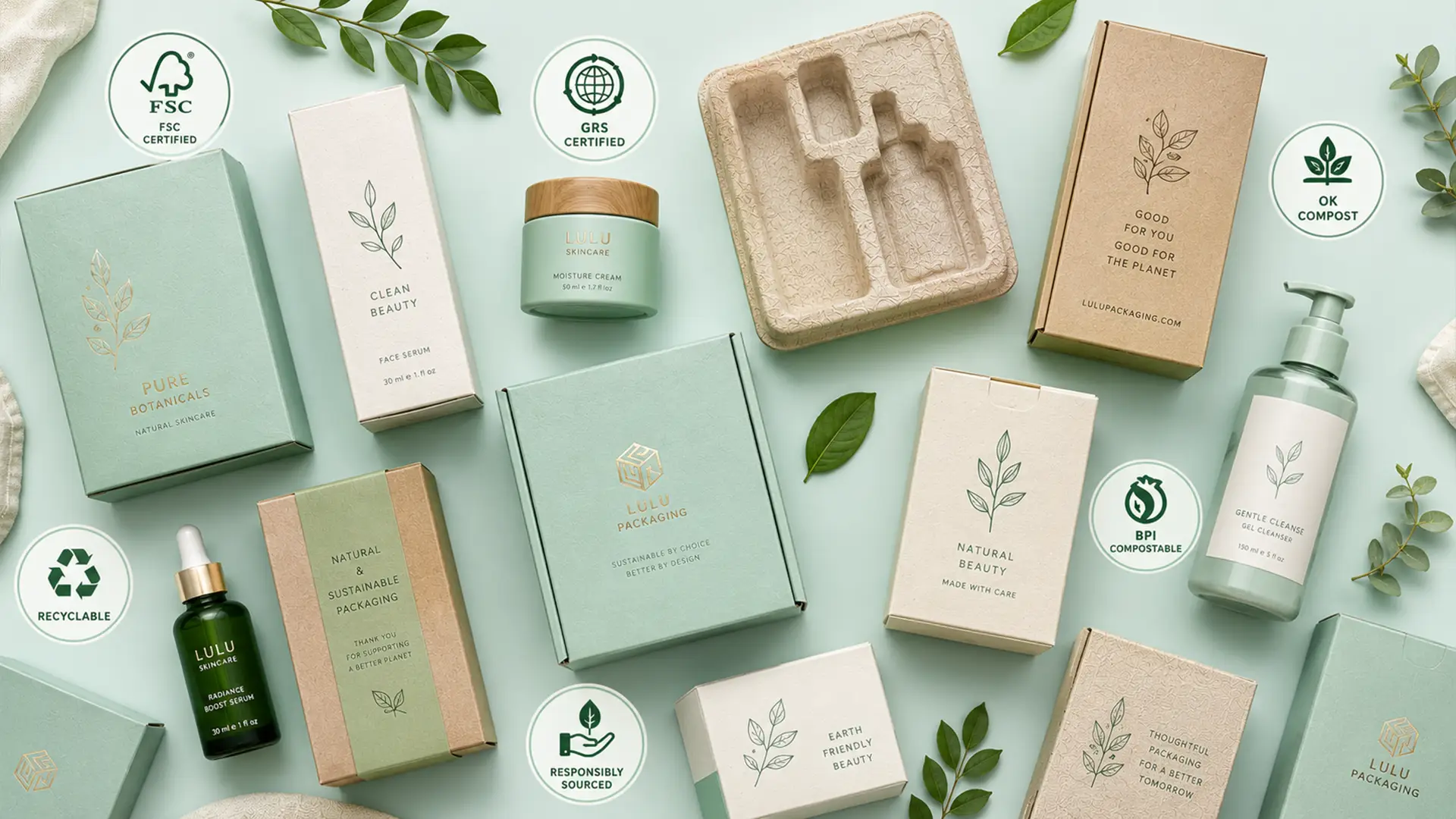
Here are the certifications that actually mean something:
FSC (Forest Stewardship Council) For paper and wood-based materials, this means the fiber came from a responsibly managed forest. Look for the FSC logo on the paperboard spec sheet, not just the supplier's website.
GRS (Global Recycled Standard) Verifies that recycled content claims are accurate. If a supplier says a material is 80% post-consumer recycled, GRS certification means that's been independently verified.
OK Compost / BPI Certified Compostable For materials claiming to be compostable, these certifications confirm the material will actually break down under industrial or home composting conditions. Without this, "compostable" is just a word.
Beyond certifications, ask your supplier these questions before you commit:
- What percentage of this material is post-consumer recycled content?
- Is this material accepted in US municipal recycling programs?
- Are the different components (bottle, pump, cap) made from the same polymer family?
That last question matters more than most people realize. A bottle, pump, and cap made from different materials has to be disassembled before recycling. Most consumers won't do that. Mono-material packaging, where everything is the same polymer, gets recycled at a much higher rate because it requires no disassembly.
And watch for greenwashing red flags: packaging described as "eco-conscious," "earth-friendly," or "responsible" without any certification backing those claims. Ask for the spec sheet. A good supplier will have one ready.
What's Trending Right Now: Sustainable Packaging
We talk to beauty brand buyers every day. Here's what they're actually asking for.
Refillable formats are going mainstream: This used to be a niche luxury play. Now mid-size brands are asking for it. The model works a premium outer shell the customer keeps, and a lightweight inner pod they replace. It's better for the environment, creates a repeat purchase habit, and gives brands a story worth telling.
Minimalist packaging is gaining ground: Fewer layers. Less material. Cleaner design. It's not just an aesthetic trend. Removing unnecessary packaging reduces cost and waste at the same time. Some brands are discovering that stripping packaging back actually elevates perceived quality.
Paper-based innovation is opening new doors: Advanced coatings and laminates now make paper viable for products that previously required plastic barriers. If your formula team told you paper packaging wasn't an option two years ago, it might be worth revisiting.
Transparency is becoming a shelf requirement: More than three-quarters of beauty shoppers say they want to see clear, explained ingredient and material information on the pack. Brands are responding by using their packaging as a storytelling platform, not just a container.
Smart packaging is getting real traction: QR codes on pack that link to sustainability impact pages, material breakdowns, or refill ordering systems are becoming a differentiator for brands that want to go beyond a recycling symbol.
Let's Talk About Cost (Honestly)
We're not going to pretend sustainable packaging is always the same price as conventional packaging. Sometimes it costs more. You deserve a straight answer on why, and what the real numbers look like.
Here's a realistic breakdown:
Recycled paperboard: Often within 5–15% of the cost of standard paperboard. At volume, say 10,000 units and above, the gap narrows further. This is the easiest sustainable switch most beauty brands can make.
PCR plastic: Marginal cost increase over virgin plastic in most applications. The price difference has actually narrowed significantly as demand has increased supply.
Molded pulp: More expensive than plastic foam inserts at low volumes, but comparable at 5,000+ units. The premium perception it adds often more than compensates in the customer experience.
Glass: Costs more per unit than plastic, typically 30–60% more depending on the form factor. But for premium beauty products, glass often increases the perceived value enough to justify a price increase at retail.
The question isn't just "what does sustainable packaging cost?" The better question is: what does it cost your brand *not* to have a sustainability story? That's harder to put a number on. But for brands selling to consumers who read labels, it's real.
How to Choose a Sustainable Packaging Supplier in the USA
Choosing the right supplier matters as much as choosing the right material. Here's what to look for:
- They can provide certifications. Not just logos on a website. Ask for actual spec sheets and documentation for FSC, GRS, or relevant compostability certifications. If they can't produce these on request, move on.
- They work specifically with beauty brands. Cosmetic packaging has requirements that general packaging suppliers don't always understand: formula compatibility, regulatory labeling space, finish options that hold up to cosmetic product contact. Experience in your category matters.
- They offer samples before full production. No reputable supplier should ask you to commit to a full run before you've held the packaging in your hands. Samples protect you. A supplier who resists this is a red flag.
- They're transparent about MOQs and lead times. Custom eco-friendly packaging typically requires a minimum of 5,000–10,000 units depending on the material and form. Lead times for custom production run 4–8 weeks after sample approval. A supplier who gives you vague answers on either of these is a supplier who will create problems later.
- They're based in the USA, or have US distribution. This matters for lead time, communication, and carbon footprint. A supplier shipping from overseas adds weeks to your timeline and miles to your supply chain's environmental cost. It can also complicate quality control.
These are the same questions we welcome from every new client. Getting clear answers upfront makes the entire process smoother and leads to packaging you're confident in.
Putting It All Together: Where to Start
If you've made it this far, you're serious about making the switch. Here's a practical starting point.
Start with your outer packaging. Your cartons, boxes, and sleeves are the most visible part of your packaging. Switching to recycled paperboard is typically the easiest, fastest, and most cost-effective change you can make. It has the biggest visual impact on your sustainability story with the least operational disruption.
From there, audit your inner components. Look at your bottles, tubes, and caps and ask whether PCR plastic is a fit. Then consider whether a refillable format makes sense for your hero product or your highest-margin SKU.
Get samples before you decide anything. Reading about materials is useful. Holding them is a different experience entirely. Texture, weight, and how a surface takes to printing are things you need to feel.
And ask your supplier the hard questions. A good partner in sustainable cosmetic packaging won't just take your order. They'll help you think through what's right for your product, your customer, and your business model.
Frequently Asked Questions
What is the most sustainable cosmetic packaging material?
There's no single answer. It depends on your product and your priorities. For outer packaging, recycled paperboard with FSC certification is usually the most accessible and cost-effective choice. For primary containers, the answer depends on your formula, your format, and your volume. We're happy to walk through the options with you based on your specific SKUs.
Is sustainable packaging more expensive for small beauty brands?
Some materials cost more than conventional alternatives, yes. But the gap is smaller than most brands expect, especially for recycled paperboard and PCR plastic. At lower volumes, molded pulp and glass tend to have a more noticeable cost premium. The right starting point is usually the change that gets you the most sustainability impact for the least cost increase.
What certifications should I look for?
For paper-based materials: FSC or SFI certification. For recycled content claims: GRS (Global Recycled Standard). For compostable materials: OK Compost or BPI certification. Always ask your supplier for the actual documentation, not just a logo.
Can I get custom printed sustainable packaging with low MOQs?
For most custom eco-friendly packaging, minimum order quantities start around 5,000 units. Digital printing options have lowered MOQs on labeling and some carton formats. If you're in early stages with lower volume needs, we can help you identify the right starting format.
What's the difference between biodegradable and compostable packaging?
Biodegradable means a material will eventually break down, but that could take years, and often requires specific conditions. Compostable is more precise: it means the material breaks down within a defined timeframe under specific composting conditions. Industrial composting (higher temperatures, managed facilities) is different from home composting. If you're making a compostability claim, make sure it's backed by a recognized certification.
How long does custom eco-friendly cosmetic packaging take to produce in the USA?
After sample approval, production typically runs 4–8 weeks depending on material and complexity. Custom tooling (for unique shapes or formats) adds time. We recommend planning your packaging timeline at least 10–12 weeks before your desired launch date to leave room for revisions.
Ready to Get Started?
Sustainable cosmetic packaging isn't a single decision. It's a process. And the best time to start is before you need it, not after your launch date is locked in.
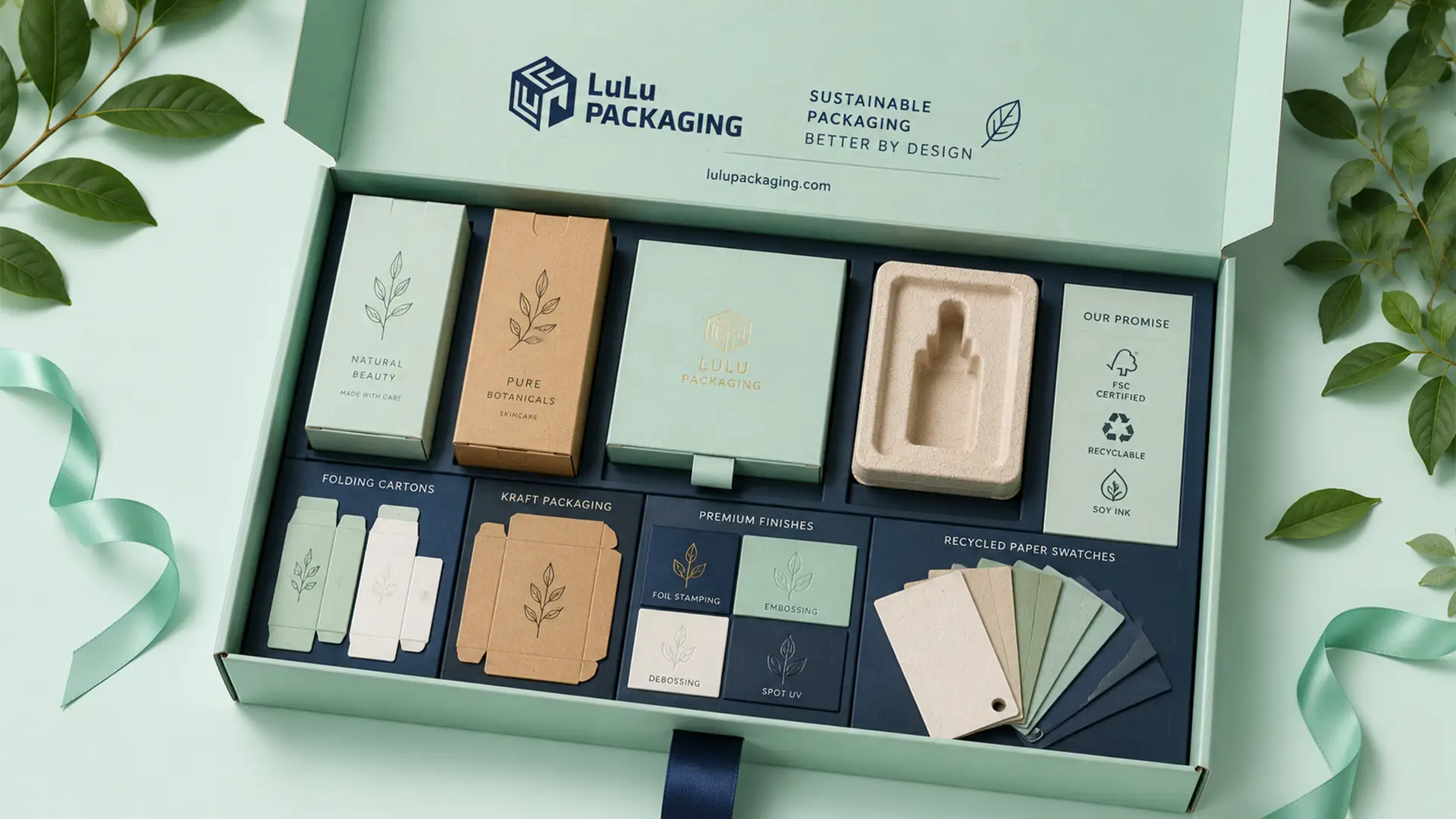
If you're evaluating materials, planning a new product line, or rethinking your current packaging from a sustainability standpoint, we'd love to talk. We offer sample kits so you can see and feel our eco-friendly options before committing to anything.
Or if you have specific questions about your product or timeline, reach out directly. We respond to every inquiry, usually the same business day.
Need Custom Packaging?
Our packaging specialists are here to design the perfect solution for your brand. Get a tailored free quote today.